GIA Certificate | The Right Ring

What to know about a GIA Certificate

The GIA Grading Report

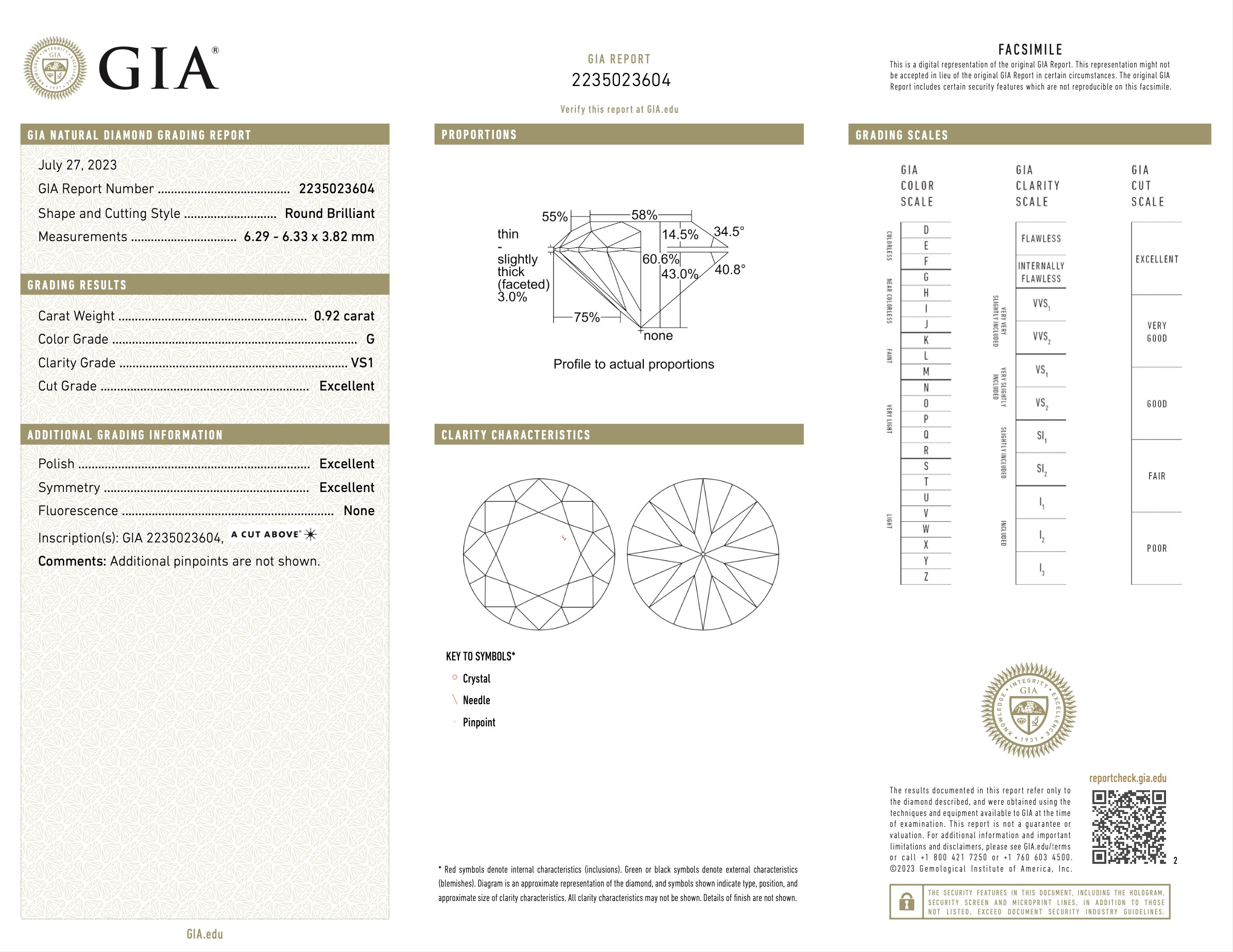
When searching for the perfect diamond, the GIA Grading Report is your most important guide. It defines every measurable characteristic of a specific stone — ensuring that what you see on paper matches the physical gem in your hands. Understanding each variable on this certificate is crucial: even a single grade difference can mean a price swing of thousands of dollars.
Why It Matters

The GIA report removes all guesswork. Each variable is independently graded by the world's most trusted gemological laboratory — giving you an objective, verifiable account of exactly what you're buying.

What's Inside

Below is a full breakdown of every variable found on a standard GIA report — and what each one means for the value and appearance of your diamond.

All natural diamonds we sell come with a GIA certificate. We will not sell you a stone without one.

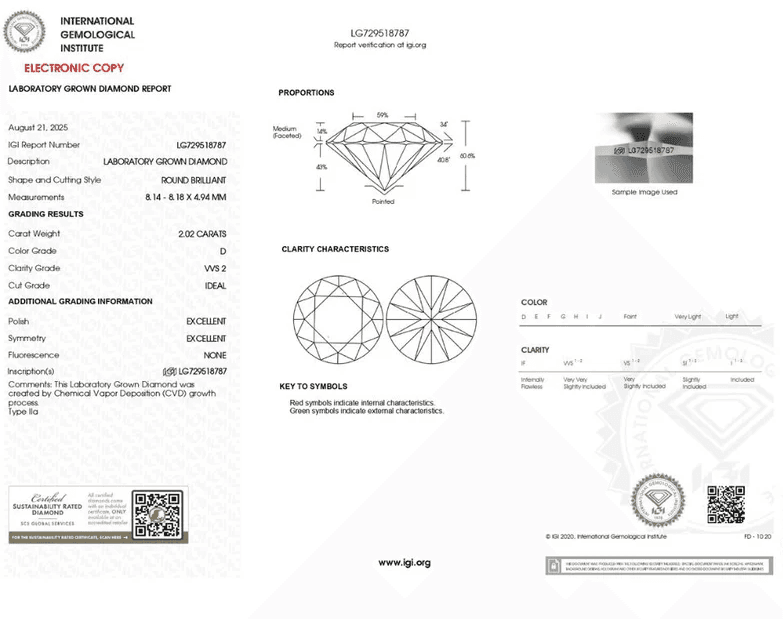
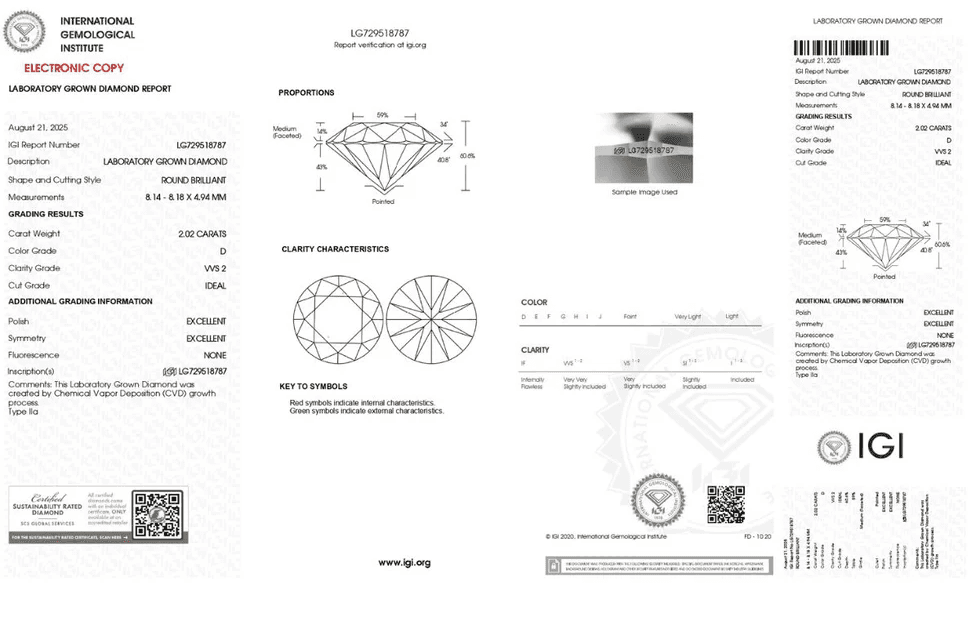
The carat weight is the carat size of the stone (carat is the units). Note that the carat weight is not directly proportional to the millimeter size of the stone (in this case diameter)

The carat weight is the carat size of the stone (carat is the units). Note that the carat weight is not directly proportional to the millimeter size of the stone (in this case diameter)

Note that brilliance, scintillation and pattern of the diamond are not listed in the report, which is technically part of the cut grade when grading, however, since only round diamonds have a cut grade, then how do all other shapes get ranked on these very important variables? To us, graders do not factor these fully when giving a diamond their specifications. That is why it is our opinion that you need an expert to help hand pick a diamond for you, or be able to see a video before purchasing. No one should have to guess whether their diamond sparkles or shines brighter than another.

Brilliance, scintillation, and pattern — the qualities that determine how a diamond actually sparkles — don't appear on a grading report. For rounds, they're folded into the cut grade. For every other shape, they aren't formally graded at all. This is why we believe no one should purchase a diamond without either seeing it on video or having an expert hand-pick it for them.


The measurements refer to the diameter of a round stone, refers to the length and width of an elongated stone like an oval, or emerald cut

The measurements refer to the diameter of a round stone, refers to the length and width of an elongated stone like an oval, or emerald cut

The color, and clarity of the diamond is the biggest factor in determining the value

The color, and clarity mostly determine the value

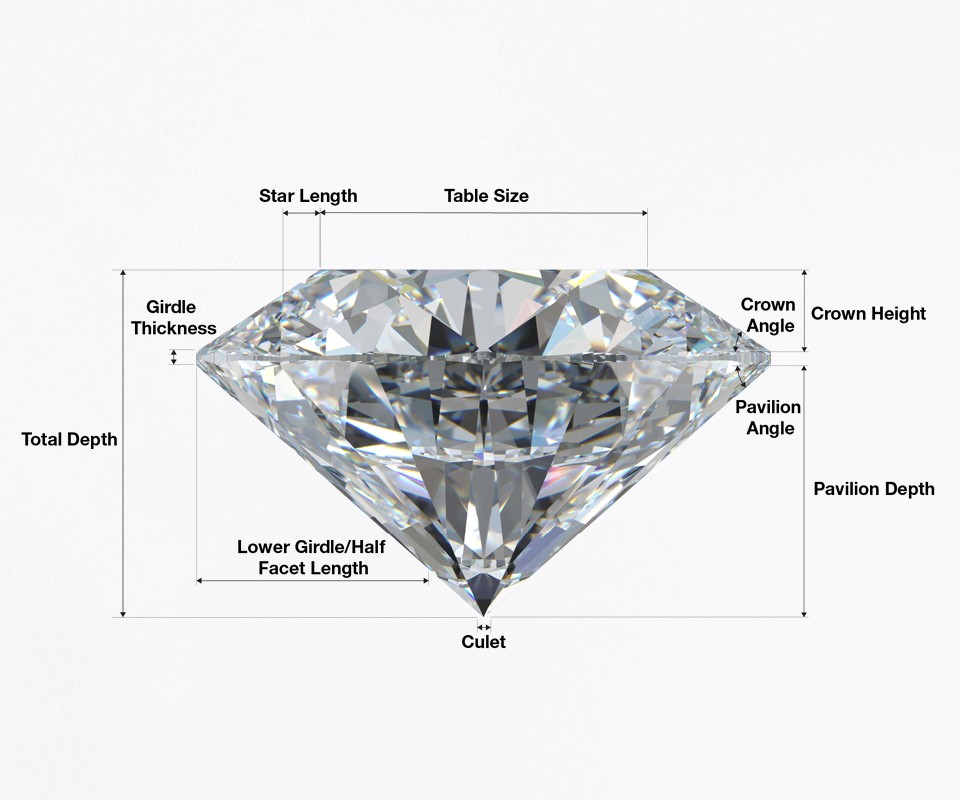
Math proportions

The cut grade includes all of the math parameters within a round diamond

The cut grade includes all of the math parameters within a round diamond

The map shows what type, the exact location and the size of the inclusion

The inscription reflects the report number inscribed on the girdle of the stone

The inscription reflects the report number inscribed on the girdle of the stone

the proportions chart shows the parameters within a diamond

The grading scales show the range of color, clarity and cut GIA grades by
The comments section shows how the lab grown was produced, usually CVD, or HPHT

A sample visual of the inscription is portrayed

The cut grade is graded from ideal, excellent, very good, good, fair/poor

The comments section shows how the lab grown was produced, usually CVD, or HPHT

A sample visual of the inscription is portrayed

The cut grade is graded from ideal, excellent, very good, good, fair/poor

A sample visual of the inscription is portrayed

The cut grade is graded from ideal, excellent, very good, good, fair/poor

The comments section shows how the lab grown was produced, usually CVD, or HPHT

A sample visual of the inscription is portrayed

The cut grade is graded from ideal, excellent, very good, good, fair/poor

The comments section shows how the lab grown was produced, usually CVD, or HPHT

A sample visual of the inscription is portrayed

The cut grade is graded from ideal, excellent, very good, good, fair/poor

The comments section shows how the lab grown was produced, usually CVD, or HPHT

It might not be essential to dive into each parameter when purchasing a diamond, but that's what we are here for!

Each parameter is measured with high-tech machines and is displayed in the top center of a GIA report

Design My Ring

Familiar with what's available and want to create your own ring?
Click Create My Ring to build your custom ring.